Cultural message · Identity & Morality
Forgiveness Sets You Free
What it is
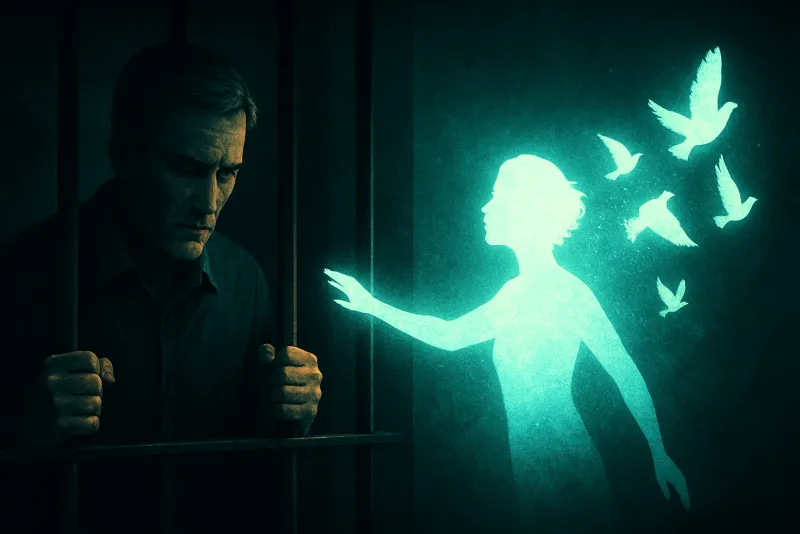
Forgiving — even the unforgivable — is presented as the path to peace and healing. Holding grudges is self-imprisonment; releasing them is liberation.
How to spot it
The plot contains ALL of: (1) a character who has been deeply wronged, (2) a moment where they choose forgiveness over punishment or revenge, (3) the act of forgiving is framed as healing, liberating, or morally superior.
- A climactic moment of choosing mercy over vengeance
- A grudge or desire for revenge is shown causing ongoing suffering
- Forgiveness leads to peace, reconciliation, or redemption for both parties
- The story frames holding on as weakness and letting go as strength
- A villain receives mercy and is changed by it
Classic examples
Black Panther (T'Challa forgiving), Frozen 2, Les Misérables, The Shawshank Redemption, Luke sparing Vader
Contrast with
Revenge Is Sweet (Revenge Is Sweet celebrates vengeance; Forgiveness Sets You Free celebrates mercy)
Movies pushing this message (40)

Flywheel: Ignition of the Soul
Noah has deeply wronged Ana, his son, and customers (including his pastor), and the story hinges on whether genuine repentance can earn forgiveness. Ana's arc is explicitly about refusing surface-level reform and requiring demonstrated transformation before reconciliation—her withholding or eventual granting of forgiveness is the climactic emotional stakes. The film frames the path to healing through acknowledgment of wrongs, humility, and making amends, with forgiveness positioned as the liberating resolution for both parties.

Whalefall
Jay is explicitly haunted by unresolved guilt from a strained father-son relationship — a grudge/wound causing ongoing suffering. Inside the whale he confronts and works through that grief, and the film frames this as father-son reconciliation. The act of releasing the burden is presented as both psychologically liberating and causally linked to his physical escape, framing forgiveness as the path to freedom.

Adam’s Fire
Forgiveness is the film's explicit central theme. Adam is deeply wronged (witnesses mother's murder), his sustained desire for revenge causes visible suffering (fights, vandalism, hammer confrontation), and his entire arc is the journey from rage to mercy guided by faith and Scripture. The film frames forgiveness as 'the greatest act of courage, not weakness' — a direct articulation of the trope's core claim that letting go is the harder, nobler path. Jackie receives that mercy, fulfilling the signal of a wrongdoer changed by the act of forgiveness.
Atonement
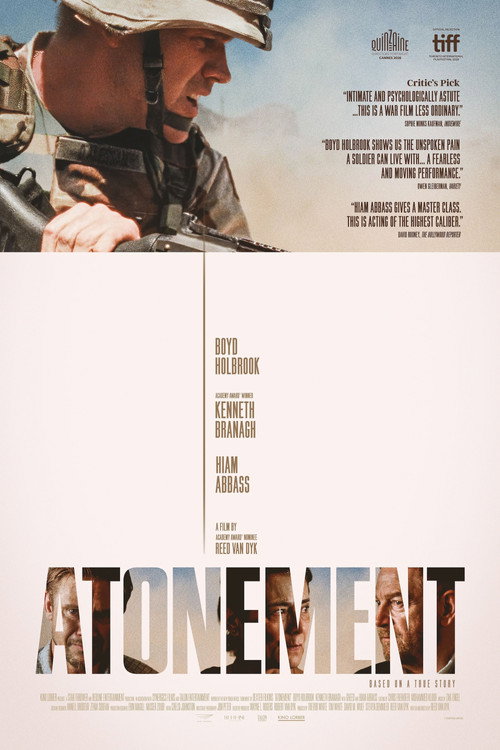
The entire film is structured around whether forgiveness and reconciliation are possible between Lou (the Marine who killed Mariam's husband and sons) and the surviving family. The title 'Atonement' signals the theme explicitly. Signal 1: the culminating encounter between Lou and the family is a direct climactic moment of potential mercy over vengeance. Signal 2: Lou's PTSD and guilt drive years of ongoing suffering — the pursuit of atonement is framed as the only path forward. Signal 3: the three-chapter structure leads deliberately toward the encounter as the mechanism of potential healing for both parties. Signal 4: Lou's proactive search for the family (via journalist Michael Reid) frames letting go and seeking reconciliation as the harder but necessary path, contrasted with his decade of paralysis.

Misfit Mentor
The film explicitly centers on Egan's 'effort to forgive himself' and 'search for personal redemption.' His insecurities and regret over missed family moments constitute ongoing self-inflicted suffering. Coming to understand the positive impact he had on students and the music community is the mechanism that enables self-forgiveness, framed as healing and liberation. The arc is: guilt/regret → reckoning → self-compassion → redemption.

Traces of Home
The parents' unprocessed grief has caused ongoing suffering in Ghunim's relationships with them — a grudge of silence and distance. The film's stated conclusion — 'loss ultimately relieved through reconciliation' — frames letting go and reconnecting as the healing path. Forgiveness (of parents, of history, of self) is the explicit mechanism by which the story resolves.
Oasis: Don't Look Back in Anger
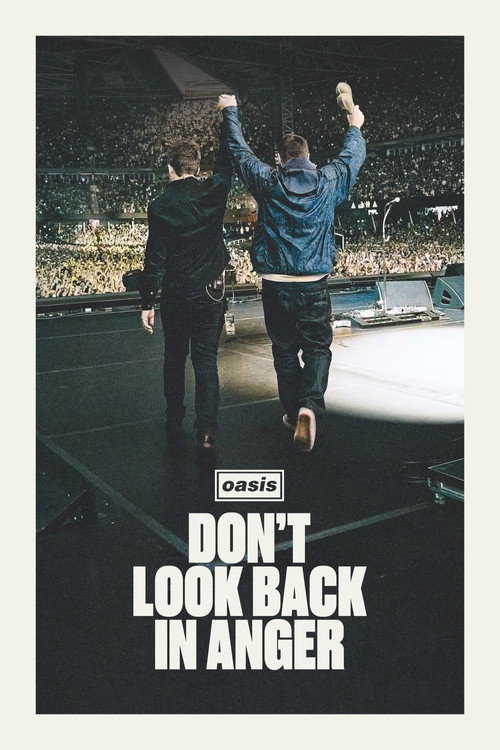
The film's central arc is two brothers choosing reconciliation over a 15-year grudge. All three core-pattern elements are present: both Gallaghers were deeply wronged (bitter, public acrimony); the reunion itself is the act of choosing forgiveness over continued estrangement; and the documentary's explicitly celebratory, reconciliatory tone frames letting go as the right path. Four signals fire: (1) the reunion decision is the climactic moment of mercy over grievance, (2) the prolonged estrangement is shown as the cost of holding the grudge, (3) forgiveness yields peace and a new chapter together, and (4) the film overtly frames 'putting differences aside to chart a new path' as the resolution.
The Death of Robin Hood
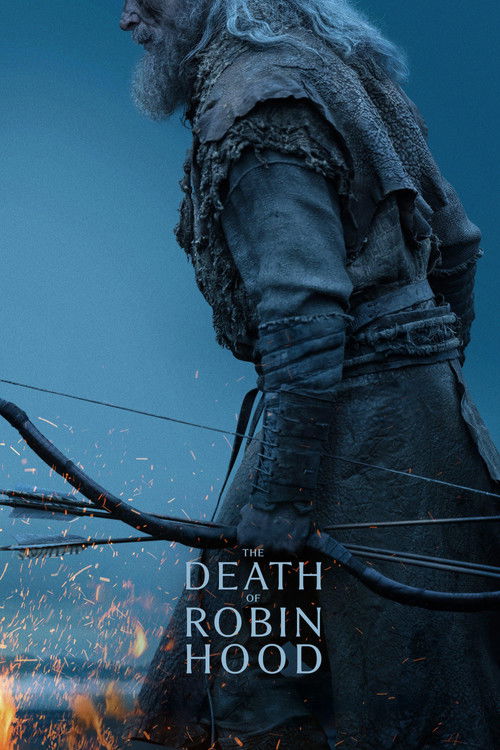
Forgiveness and second chances are named explicitly as the film's thematic core, alongside the central question of whether a lifetime killer can earn 'salvation' — forgiveness framed as the path to peace (signal 1). The priory and Sister Brigid embody institutional mercy, offering Robin shelter and the possibility of absolution (signal 2). The one-eyed youth's retribution quest versus Robin's tentative reach toward peace sets up a climactic choice between vengeance and letting go (signal 3). The 'cycle of generational violence' framing positions releasing the grudge as the harder, nobler path (signal 4). All three core conditions are met: Robin has deeply wronged others, forgiveness as transformation is the central interrogation, and the story frames it as the route to healing/salvation.

Finnegan's Foursome
Freddy's resentment toward his father — built over more than a decade of finishing second — is the story's primary internal conflict. The trip forces him to confront that grudge, and it gives way to understanding by the end. The plot frames this release as healing: what begins as a dutiful trip becomes unexpected bonding. Signals present: the long-held grudge causes ongoing suffering; the Ireland journey functions as a climactic moment of reckoning; forgiveness leads to reconciliation across generations; and letting go is framed as the emotionally richer outcome.

The Amazing Digital Circus: The Last Act
Pomni enters Jax's mindscape and witnesses that he previously tried to strangle her out of grief-rage, yet she responds with a hug and an apology for not being there sooner. This act of compassion and forgiveness — extended toward someone who wronged her — is the mechanism that pulls Jax back from abstraction. Jax's unresolved guilt and resentment about his abusive mother is shown as the root of his collapse, framing the inability to process and release past wounds as the cause of his monstrous state. Forgiveness is explicitly the healing force.

Westhampton
The film's explicit thematic core is whether forgiveness — from others and oneself — can be earned for a seemingly unforgivable act. Multiple wronged characters respond to Tom's return with sustained grudges (Jay's lawsuit, Dickie's demand he leave), demonstrating ongoing suffering from holding on. The major revelation reframes Tom's culpability, positioning the story toward a reckoning with mercy. The slightly surreal closing scene functions as a resolution to this question rather than to any external conflict. All three detect_when criteria are met: deeply wronged parties (Dickie, Jay, the town), a story structured around whether forgiveness is chosen over punishment, and forgiveness framed as the moral/healing path.

Magic Hour
Erin is explicitly furious at Charlie over a pivotal incident, and the couple is 'emotionally distant, seemingly irreconcilable' — a grudge causing sustained suffering (signal 2). The entire desert retreat is structured as a reconciliation arc, with the film's stated theme being 'what it takes to sustain love through grief and heartbreak,' framing release of pain as the path to healing (signal 3). The 'necessary delusions that keep romance alive' language implies the story validates letting go of grievance over holding on (signal 4). All three core pattern elements are substantially present: a deeply wronged character (Erin), an implied movement toward forgiveness as the emotional resolution, and that act framed as the mechanism of healing rather than punishment.

Swapped
The generational grudge between the two species — rooted in the firewolf's ancient rampage and subsequent raiding — is shown causing ongoing division and suffering. The climax challenges this inherited cycle of enmity, with Ollie and Ivy's bond reframed as reconciliation. The resolution is explicitly heartwarming, presenting the letting-go of inherited grievance as liberating and morally superior to perpetuating the conflict.

Mother Mary
Sam was deeply wronged by Mary's dismissal of her from the inner circle — a wound she carries for fifteen years, described as 'a broken tooth.' The reunion surfaces buried resentments, building to a climactic cathartic moment where Mary offers a 'deeply felt apology' and both women confront their shared pain. The supernatural spirit's expulsion and transformation into the gown literalizes the act of letting go. The story explicitly frames the outcome not as romantic reunion but as 'mutual catharsis,' and both women depart with 'hard-won peace' — forgiveness as liberation rather than reconciliation. Signals present: (1) ongoing suffering from the unresolved wound; (2) a climactic moment of release rather than revenge or further estrangement; (3) forgiveness leading to peace for both parties; (4) the story frames release/catharsis as the harder but superior path over holding on.

The Secret Between Us
The plot is structured around whether forgiveness is possible after deep betrayal. Wanda must decide whether to forgive Jack's years-long deception; the children must move past disillusionment with their father's hypocrisy; Jack must seek redemption. Themes of marital trust and redemption frame forgiveness as the pathway to healing. The sustained pain of the unresolved betrayal functions as the suffering that forgiveness would relieve.

Peaky Blinders: The Immortal Man
Multiple forgiveness arcs run in parallel. Kaulo interprets Tommy's killing of Arthur as a mercy killing and releases him from guilt, enabling his return. Tommy and Duke — estranged by illegitimacy and criminality — reconcile mid-story, which is the pivot that allows Duke to turn against Beckett. Duke's compliance with Tommy's dying request (the mercy shot) is framed as an act of love, not violence. The film's closing description explicitly marks the outcome as 'redemption and reconciliation,' and Tommy's death is peaceful rather than anguished.

Wasteman
Despite being blackmailed and coerced by Dee, Taylor refuses to carry out the murder and instead grants the dying Dee a moment of human connection — a choice of mercy over retaliation. He then stages the scene to spare further institutional entanglement, an act of protective compassion. The film's final image — Taylor walking free the next morning — frames this refusal to be consumed by the brutality around him as the act that preserves what remains of his humanity.

Cast Aside the Clouds
Forgiveness is explicitly named as one of three central virtues the characters 'struggle to define' — alongside courage and commitment — indicating it functions as a narrative theme rather than mere background. Layla is deeply wronged by imprisonment and brutal interrogation, and the mention of betrayal introduces wrongs requiring forgiveness. The plot frames 'personal truth' through letting go rather than retaliation, and the thematic emphasis on 'hope' and 'cross-faith human connection' aligns with forgiveness-as-liberation.

Another World
Forgiveness is the film's central engine. Yuri's inability to forgive herself for unknowingly consuming Kenji manifests as a literal Seed of Evil that grows across a thousand years of reincarnations — the grudge-as-ongoing-suffering signal is literalized. The climax is the revelation that Kenji reincarnated as Hardy (a boy Ying already saved), which provides the closure that dissolves the ancient rage. The film's Buddhist framing explicitly equates holding on with suffering and releasing with liberation. Gudo's final reincarnation also frames letting go as the noble path.

Eye for an Eye
Vincent's unresolved grievance drives the curse and causes ongoing death (Shawn, Julie, Patty). The resolution is not combat or escape but atonement: Anna fractures her arm as restitution and, in the dream sequence, returns Vincent's stolen glass eyes—restoring what was taken rather than punishing. This act of empathic repair releases both parties: Vincent's spirit finds peace and Anna's name vanishes from the tree. The story explicitly frames genuine repentance and restorative justice as the only path to freedom, not force.

Without Blood
Nina was catastrophically wronged (family murdered before her eyes), and the film's entire dramatic engine is the question of whether she will complete her revenge. The climactic dinner is a moment of choosing acknowledgment and being seen over lethal punishment. The ambiguous ending reaches toward something beyond vengeance and explicitly 'rejects cycles of violence,' framing release from the revenge imperative as the harder but morally superior path. Nina's lifelong suffering (institutionalization, child-bride) demonstrates how holding the grudge has imprisoned her.

National Theatre Live: Death of England: Closing Time
Denise has been deeply wronged by Carly's unreflective racism and the broader failures that destroyed her business; the play builds toward Denise choosing reconciliation over rejection. The ending explicitly frames 'beginning again together' as the only path forward — letting go of grievances is liberation, not weakness. The reconciliation is the emotional and narrative climax. Carly (the flawed party who exposed her racist assumptions and was publicly cancelled) receives hard-won acceptance from Denise. All three core requirements are met: a character deeply wronged, a choice of forgiveness over punishment, and that choice framed as healing and forward motion. Signals: climactic reconciliation scene; the cancellation fallout and Denise's bitter disappointment show the ongoing cost of unresolved rupture; the joint shop-closing enacts shared peace; 'beginning again together' frames release as strength; Carly's contradictions are met with acceptance rather than expulsion.

Gaslit by My Husband: The Morgan Metzer Story
After years of abuse culminating in a violent sexual assault, Morgan chooses to forgive Rodney in her courtroom victim impact statement — explicitly for the sake of their children — while firmly condemning his actions. The film frames this as moral clarity and self-liberation rather than weakness or capitulation: she refuses reconciliation, accepts no minimization, and still endorses the 70-year sentence. Signals hit: climactic public moment of choosing mercy over pure condemnation; the act of forgiving is framed as healing and strength rather than surrender; the story distinguishes forgiving from excusing, presenting release as the harder and nobler path.

Linda Perry: Let It Die Here
Perry was deeply wronged by her abusive mother yet chooses to provide care for her in her final days — an act of mercy over abandonment. Her ongoing self-criticism and belief that she 'deserves suffering' show the unresolved wounds actively causing suffering. The film title 'Let It Die Here' implies letting go as the intended arc, framing this caretaking as part of a healing journey rather than a punishment or vengeance narrative.

Flag Day
Jennifer is deeply wronged by John's neglect, reckless endangerment (forcing child-her to steer the car), and failure to protect her from assault. The film's conclusion frames her 'hard-won reconciliation of genuine love for her father with the lasting damage his reckless, self-mythologizing life inflicted' as the emotional resolution — forgiveness/acceptance as hard-earned peace rather than continued suffering. The story presents letting go of resentment as the costlier but liberating path.

Gunpowder Milkshake
Sam was abandoned at age twelve and grew up without her mother. When she tracks Scarlet down and learns Scarlet was secretly watching over her all along, the reunion is warm rather than confrontational — Sam chooses reconciliation over resentment. The film ends with them together, framing the letting-go of grievance as resolution.

A Bend in the River
Matt returns to County Tyrone burdened by decades of unresolved wounds — an abusive schoolteacher, a broken engagement, guilt, grief over his mother, and the lingering costs of the Troubles. The plot summary explicitly states the arc moves toward 'reconciliation and redemption,' framing the inability to outrun the past as self-imprisonment and the act of confronting and releasing it as the path to healing. Signals present: (1) grudges and trauma are shown causing ongoing suffering across 25–30 years; (2) the arc moves toward forgiveness and reconciliation rather than retaliation; (3) the story frames 'outrunning' the past as impossible and letting go as the necessary resolution; (4) the film acknowledges the cost of return but validates it as the liberating choice.

The SpongeBob Movie: Sponge on the Run
SpongeBob—sentenced to execution by Poseidon—responds by offering friendship rather than resistance; this mercy confronts Poseidon with his own profound loneliness and transforms him, freeing all enslaved snails (a villain changed by mercy). Plankton's parallel arc (finding victory hollow, joining the rescue) reinforces the theme that letting go of grievance is both healing and liberating.

Buddy Games
Shelly's five-year grudge against Bender is the engine of his destruction — he divorces Nikki, spirals into depression and suicidal ideation, and is barely functional. His act of holding on (drugging and kidnapping Bender) fails entirely; Bender wins the final contest anyway. The climax inverts revenge: Bender reveals the exculpatory truth and uses his prize money to fund Shelly's prosthetics. The restored friendships are the payoff, framing release of the grudge as the only path to healing. All four core signals fire: ongoing suffering caused by the grudge, a climactic mercy gesture instead of retaliation, forgiveness producing reconciliation for both parties, and the narrative arc treating 'holding on' as the source of Shelly's ruin.

The Remake
Sheridan and Riccardo carry decades of mutual resentment from their ill-fated romance, and that unresolved grudge is actively causing suffering — constant on-set clashing forces Frank Zelski into a referee role and the feud spills into a public TV confrontation. The story's arc is entirely driven by the two characters being compelled to face buried emotions and let go of old wounds, with the resolution framed as what 'fate may yet hold' — positioning reconciliation/forgiveness as the liberating endpoint. Three signals fire clearly: (1) the grudge causes ongoing suffering, (2) the arc moves toward choosing emotional release over continued resentment, and (3) reconciliation is the implied peace/redemption payoff for both parties.

Moonlight
Chiron has been wronged by two key figures: Paula (neglect, financial drain) and Kevin (coerced into beating him). His hardened Atlanta persona is framed as ongoing self-imprisonment. The tearful reconciliation with Paula in rehab — she apologizes, he weeps — is a climactic act of forgiveness framed as release. Driving back to Miami to see Kevin, despite Kevin's betrayal, is a second act of letting go, and the film rewards both with peace and connection.

Talladega Nights: The Ballad of Ricky Bobby
Ricky is wronged by an absent father and a best friend who married his ex-wife, yet the climax is reconciliation rather than reprisal. Reese's admission of worthless advice creates a forgiveness moment; Cal's loyalty during the race redeems him; Ricky even impulsively kisses rival Girard after their collision. The film frames letting go of grievance — and of the 'first or last' obsession itself — as the path to peace. Signals: forgiveness leads to reconciliation and celebration, holding onto the winning-at-all-costs creed caused suffering, and the story frames release as strength.

American Pie Presents: Band Camp
Elyse is deeply wronged when she discovers Matt's secret-filming scheme, which also jeopardizes her conservatory scholarship. The emotional climax hinges on her choosing to forgive him after he deletes the footage and rallies the band on her behalf. Forgiveness is framed as the path to resolution — it restores the relationship and completes Matt's redemption arc — while the alternative (permanent estrangement) is presented as the cost of holding on to the betrayal.
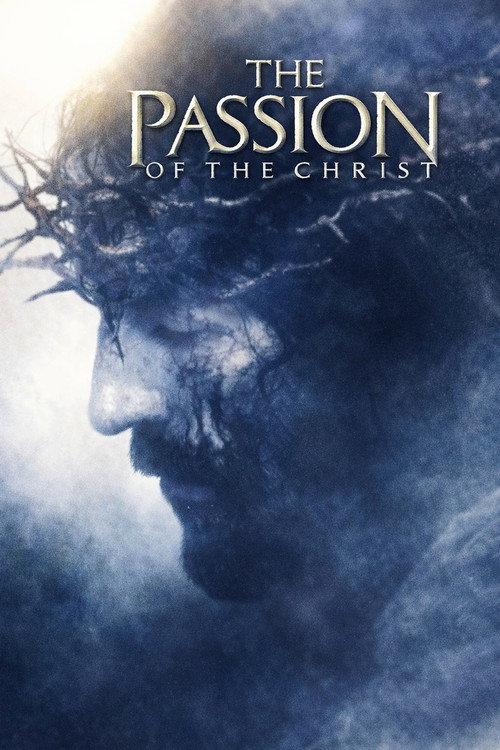
The Passion of the Christ
Forgiveness is a repeated structural element. From the cross, Jesus prays for his executioners ('forgive them, for they know not what they do') — a climactic choice of mercy over punishment by someone who has suffered maximally. The repentant criminal receives forgiveness and the promise of paradise, showing forgiveness producing immediate redemption. Peter's anguished remorse after his three denials is framed sympathetically, implying future restoration. The film consistently presents releasing grievance as the morally superior and spiritually powerful response.

Big Girls Don't Cry... They Get Even
Laura carries compounding grievances: chronic neglect in both households, a forgotten birthday, and Josh's betrayal of trust. Her flight enacts the cost of holding on. Josh explicitly reframes her situation — she cannot outrun her connections — and the resolution is her choosing to return and accept rather than punish. Forgiveness is mutual and productive: Laura is at peace, and the family has made its own small reckonings during the search.

Point Break
Utah, coerced into robbery and having lost his partner Pappas to Bodhi's violence, reaches a climactic choice at Bells Beach: lawful arrest versus releasing Bodhi to ride unsurvivable waves. He chooses mercy, knowing Bodhi will die in the surf. The act of throwing his FBI badge into the ocean immediately after is the story's closing image, explicitly framing letting go — of Bodhi, of the badge, of his institutional identity — as liberation rather than defeat. Both the mercy moment and the badge-throw signal that holding on was the lesser path.

A Prayer for the Dying
Forgiveness and absolution are the film's structural and emotional climax. Da Costa (deeply wronged — a murder witness and target) administers last rites to the dying Fallon rather than condemning him (signal: climactic mercy over vengeance). Docherty, sent to execute Fallon, cannot pull the trigger (second mercy moment). Fallon confesses his sins and dies at peace after receiving absolution (signal: forgiveness leads to redemption for both parties). The hitman-turned-penitent receives mercy and is changed by it — his peaceful death is the payoff the film builds toward (signal: villain receives mercy and is transformed). All three detect_when criteria are satisfied: Da Costa is deeply wronged, he chooses forgiveness over punishment, and the act is framed as the ultimate liberation.
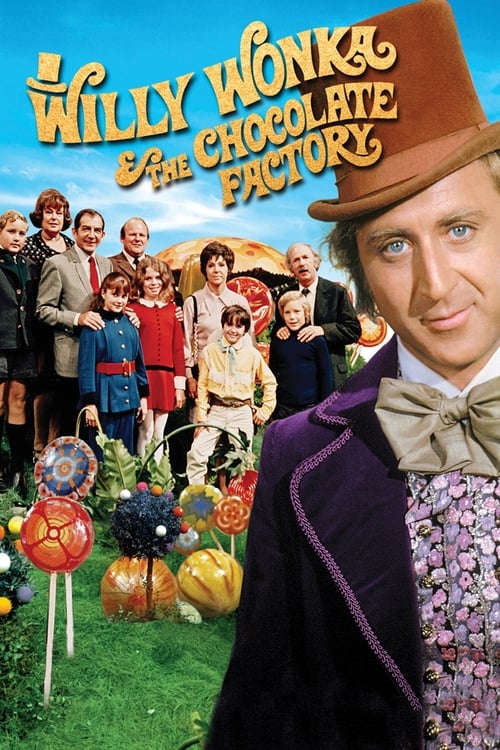
Willy Wonka & the Chocolate Factory
After Wonka harshly dismisses Charlie and Grandpa Joe — invoking a contract technicality that feels unjust — Grandpa Joe urges using the Gobstopper as an act of revenge against Wonka. Charlie pauses, then places the Gobstopper on Wonka's desk and turns to leave without a word. This is the story's moral climax: choosing integrity over retaliation, and mercy over grievance. The act immediately liberates Charlie — Wonka is visibly moved, the deception is revealed, and Charlie inherits everything. The story explicitly frames letting go as the harder and nobler path, and the 'villain' (Wonka) is transformed by the mercy shown to him.

Angel and the Badman
The Worth family extends radical forgiveness to a notorious gunfighter — Thomas's Bible inscription is an explicit act of acceptance/redemption. Quirt's climactic surrender of his gun to Penny rather than confronting Laredo with violence is a choice of mercy over vengeance. The story consistently frames letting go of violence (and his violent past) as the path to peace and liberation. His ongoing violent reputation causes suffering throughout, and releasing it leads directly to the film's resolution.

The Charitable Sisterhood of the Second Trinity Victory Church
The film's entire second act and resolution pivot on forgiveness and communal grace. Characters have been deeply wronged (abusive husband murdered, private shames carried for years) and have suffered by hiding behind piety. Riley's arrival forces a reckoning in which each woman chooses mercy and honesty over continued concealment and judgment. The story explicitly frames extending compassion—to the stranger and to one another—as an act of moral courage, and closes on reconciliation as the source of peace, directly matching the core pattern of forgiveness as liberation.