Movie
Wasteman
Narrative tropes
You Can't Trust Anyone
highTaylor's most trusted relationship — his genuine friendship with Dee — turns into blackmail and a coerced murder attempt. Gaz and Paul exploit Taylor's dependency to weaponize him against Dee. The prison institution is pervasively compromised: drug networks, violent coercion videos, and threats against Taylor's son are all facilitated within an ostensibly controlled system. Taylor must constantly re-evaluate who is using him, validating paranoia as rational survival strategy.
About this trope: Trusted allies, institutions, or authority figures are secretly working against the protagonist. Paranoia is justified because betrayal is real and pervasive.
Cultural messages
The System Is Rigged
highThe prison — the very institution charged with rehabilitation and protection — is riddled with drug economies, inmate-run coercion rackets, and implicit staff complicity. Working inside its rules would have cost Taylor his parole or his son's safety. True navigation of the system requires moral off-book action: staging Dee's overdose as natural to avoid scrutiny, cutting hair for drug money, and refusing to report the coercive attacks. Official channels are absent or would make things worse.
About this message: Institutions meant to protect people — governments, corporations, law enforcement, the justice system — are depicted as corrupt, incompetent, or actively harmful. Heroes must work outside official channels.
Forgiveness Sets You Free
mediumDespite being blackmailed and coerced by Dee, Taylor refuses to carry out the murder and instead grants the dying Dee a moment of human connection — a choice of mercy over retaliation. He then stages the scene to spare further institutional entanglement, an act of protective compassion. The film's final image — Taylor walking free the next morning — frames this refusal to be consumed by the brutality around him as the act that preserves what remains of his humanity.
About this message: Forgiving — even the unforgivable — is presented as the path to peace and healing. Holding grudges is self-imprisonment; releasing them is liberation.
Movies that share these tropes





Full plot (spoilers)
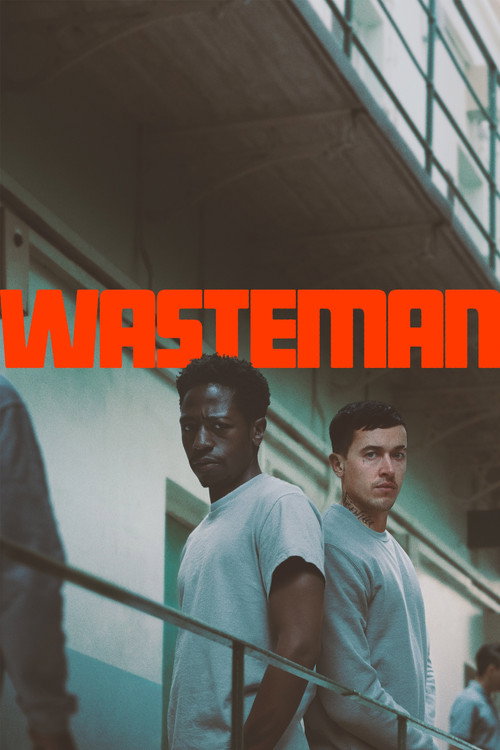
Wasteman is a British prison drama set in a UK prison. Taylor, a cook who has been incarcerated for 13 years on a manslaughter charge—he accidentally killed a teenager by selling him drugs to provide for his son—learns he is eligible for early parole if he maintains good behaviour. Addicted to Subutex, he funds his habit by cutting hair for fellow inmates Gaz and Paul, who supply him drugs. He cautiously re-establishes contact with his estranged 14-year-old son Adam and begins the daunting paperwork for release. His fragile situation is upended when charismatic new cellmate Dee arrives and immediately starts dealing drugs, cutting into Gaz and Paul's operation. Despite the tension, Taylor and Dee develop a genuine friendship. Gaz and Paul retaliate by viciously attacking Dee and subsequently coercing Taylor—including forcing him to appear in a violent video and threatening his son's safety—to act against Dee. A prison riot and Taylor's withdrawal from Subutex further destabilise him. Dee, aware of the pressure on Taylor, blackmails him into attempting murder. Taylor refuses and instead discovers Dee has already overdosed, apparently on drugged food Taylor had earlier supplied. In his final hours before release, Taylor grants the dying Dee a moment of human connection, then stages the scene to look like a natural overdose. Taylor walks free the following morning, having survived but carrying the weight of every moral compromise he made along the way. The film centres on addiction, loyalty, institutional corruption, and the brutal calculus of survival versus redemption.
Sources: Wikipedia, IMDb