Cultural message · Power, Politics & Society
The Military Are Heroes
What it is
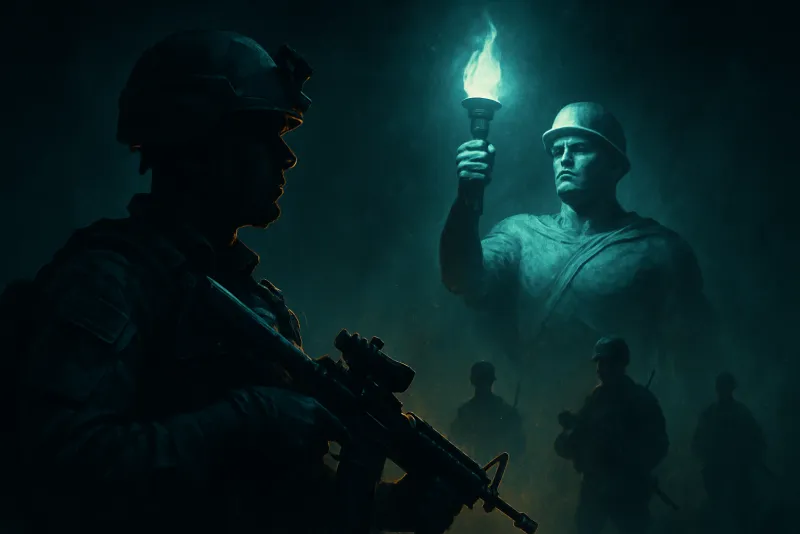
The military, intelligence agencies, or law enforcement are portrayed as fundamentally noble, heroic, and necessary. Service members are brave and selfless. Military force is justified and effective.
How to spot it
The plot contains ALL of: (1) military, intelligence, or law enforcement characters in prominent roles, (2) those characters portrayed as heroic, competent, and morally righteous, (3) institutional use of force framed as necessary and effective.
- Military equipment, missions, or culture are glamorized
- Service members are depicted as unambiguously heroic
- The military solves problems civilians cannot
- Sacrifice in service is honored and valorized
- Enemies are clearly evil, justifying the use of force
Classic examples
Top Gun, American Sniper, much of the MCU's S.H.I.E.L.D., most disaster films where the military coordinates rescue, Black Hawk Down
Contrast with
The System Is Rigged (The System Is Rigged says institutions are corrupt; The Military Are Heroes says they are noble)
Movies pushing this message (12)
Sardar 2
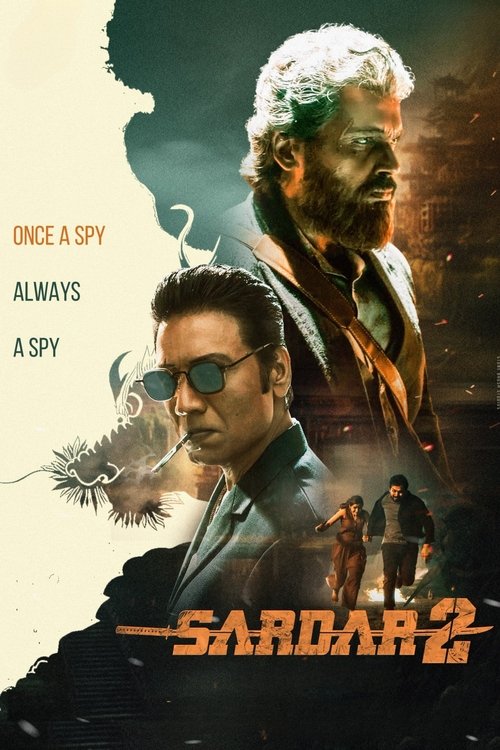
Both Sardar Chandra Bose ('legendary intelligence operative') and Inspector Vijay Prakash are framed as heroic, selfless national defenders. The spy/black-ops world is glamorized across two timelines. Sardar's psychological scar from his Japan mission valorizes sacrifice in service. Black Dagger is an unambiguous villain, justifying the use of force. Intelligence work is presented as the only thing standing between civilians and catastrophe.
Mutiny
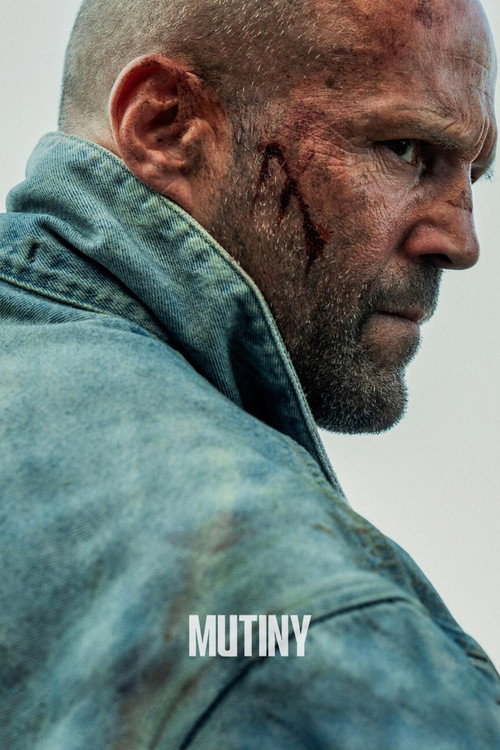
Cole's identity is built from his Royal Marine and Metropolitan Police service, and those credentials are the source of every capability that lets him prevail — infiltration, hand-to-hand combat, tactical thinking. A Navy vessel (Captain Spencer) is called in as the legitimate institutional backstop. The enemies (traffickers, mercenaries) are clearly evil, framing Cole's use of force as unambiguously righteous. Military culture and training are glamorized as the hero's defining asset.
Lucky Strike
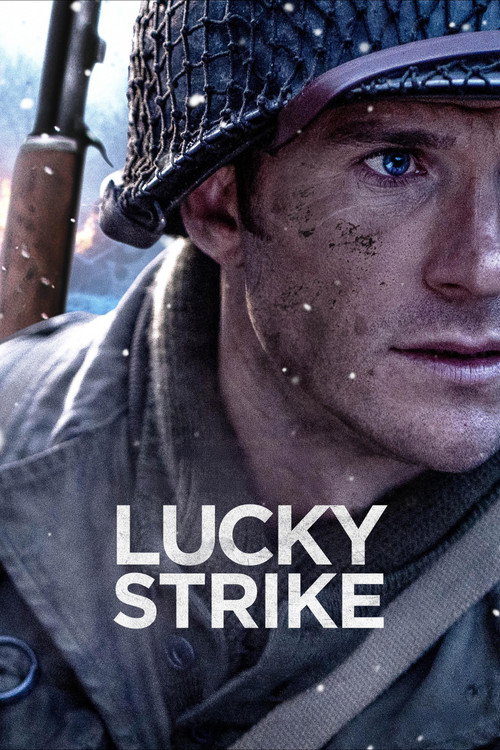
Castle is an unambiguously heroic soldier — wounded but resourceful, framed sympathetically throughout. His sacrifice in service is honored (he endures injury and extreme cold for his mission). The enemy is explicitly the Nazi Panzer army, making Allied military force inherently justified. The SCR-300 radio is described as 'cutting-edge' technology, lending mild glamour to military kit. The WWII setting against Nazis satisfies 'enemies are clearly evil, justifying the use of force.'
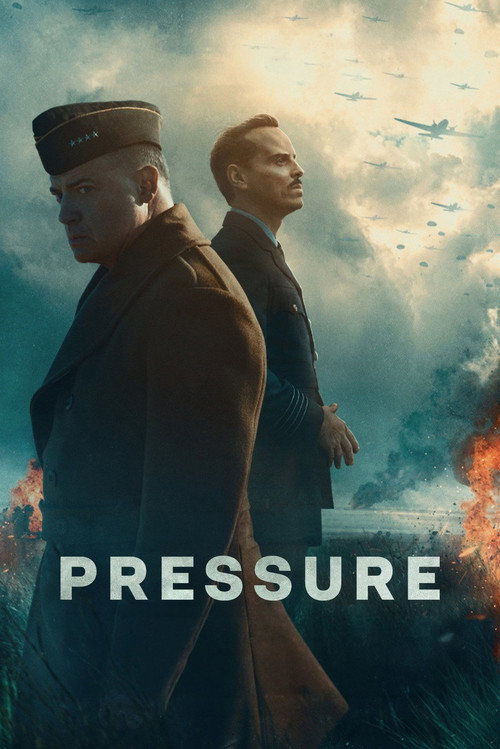
Pressure
Eisenhower and the Allied command are portrayed as heroic, morally serious, and burdened by duty. The film opens by honoring the sacrifice at Exercise Tiger, framing military loss as solemn and meaningful. The D-Day mission is presented as a necessary and justified use of force to end a clearly evil enemy (Nazi Germany). Signals: military culture and scale are treated reverentially, service members are unambiguously heroic, sacrifice is valorized in the opening scene, and the enemy's evil is taken as given justification for the invasion.
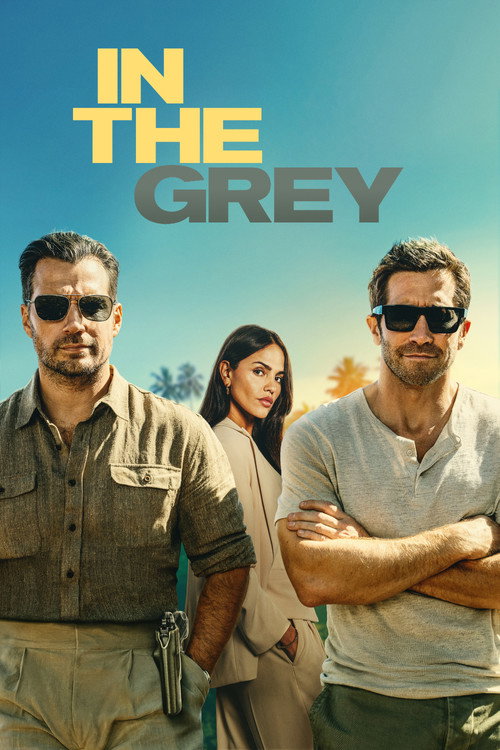
In the Grey
Bronco and Sid are elite covert operatives — 'extraction specialists' — whose missions, combat skills, and vehicle chases are glamorized in action-film fashion. They succeed where conventional or financial approaches fail, rescuing Rachel from a fortified island against Salazar's private military forces. Salazar's men are framed as clearly evil antagonists, fully justifying the operatives' lethal force. The protagonists suffer no meaningful moral questioning over their methods.
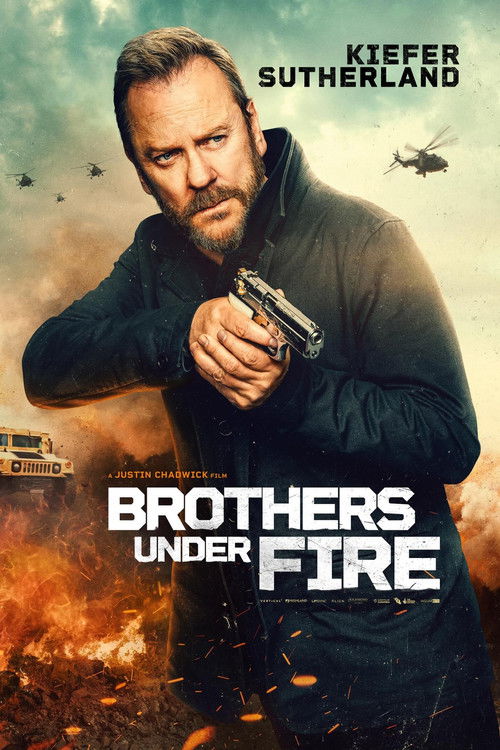
Brothers Under Fire
Jordan Wright is a 'decorated military officer' leading a squad whose competence and heroism are central to the plot. Alberto's death is honored as a rallying martyr moment. The military expertise systematically dismantles the cartel — a problem civilians alone cannot solve. Baker's cartel is framed as unambiguously evil, fully justifying lethal force. Military culture (squad loyalty, tactical operations, vowing to avenge a fallen comrade) is glamorized throughout.
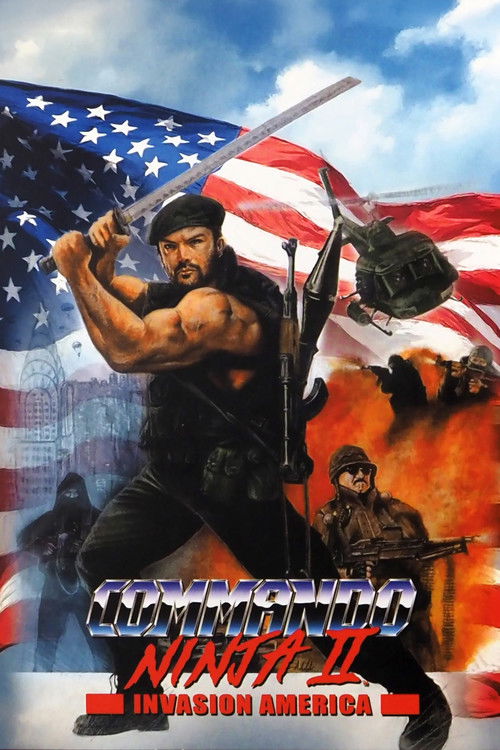
Commando Ninja 2: Invasion America
The hero team is composed of a military officer (Hopkins), a Vietnam veteran (Hunter), and a near-cybernetic soldier (Kowalsky). They are unambiguously heroic, the enemies (Communist invaders) are clearly evil, and military-style combat is what saves the day. Even as parody, the film celebrates rather than critiques this framing. Four signals: military characters in lead roles, depicted as unambiguously heroic, military force solves what civilians cannot, enemies justify the use of force.

Top Gun: Maverick
Top Gun culture, F/A-18 strike packages, and the F-14 dogfight are all glamorized. Every named pilot is portrayed as unambiguously brave and selfless. Maverick sacrifices his jet to shield Rooster; Rooster breaks orders to rescue Maverick — both framed as noble. The unnamed hostile nation is self-evidently menacing (uranium enrichment, F-14s, SAMs), justifying lethal force without moral ambiguity. The military mission succeeds precisely as designed, validating institutional force.

Lockjaw: Rise of the Kulev Serpent
Nick Kirabo is introduced specifically through his military pedigree (Army Special Operations veteran) and framed as 'the only figure' capable of confronting the threat — a problem beyond any civilian's ability to handle. His long-running solo vigil tracking the serpent codes him as selflessly dedicated. The college students are entirely helpless without him, and his military-honed skills are the sole competency presented as sufficient against the creature.

The Sun Never Sets
The Randolph family's colonial military service is framed as noble and admirable throughout. Both brothers are portrayed as unambiguously heroic and competent. The climactic aerial bombing raid (institutional military force) is the definitive solution to the threat. Sacrifice in service is honored (Clive's disgrace, Helen's death in childbirth while Clive is on duty). Zurof is depicted as a cartoonish megalomaniac, clearly justifying lethal military response.
Azaad Singh
Azaad joins the Haryana Police and is portrayed as an unambiguous hero committed to justice. His law-enforcement role enables him to confront criminal networks that ordinary civilians cannot touch. His enemies (organ traffickers, organized crime) are clearly evil, justifying force. His sacrifice — leaving home and family to serve — is valorized as the right moral choice. The film's Haryanvi setting and genre framing present police service as noble and necessary.
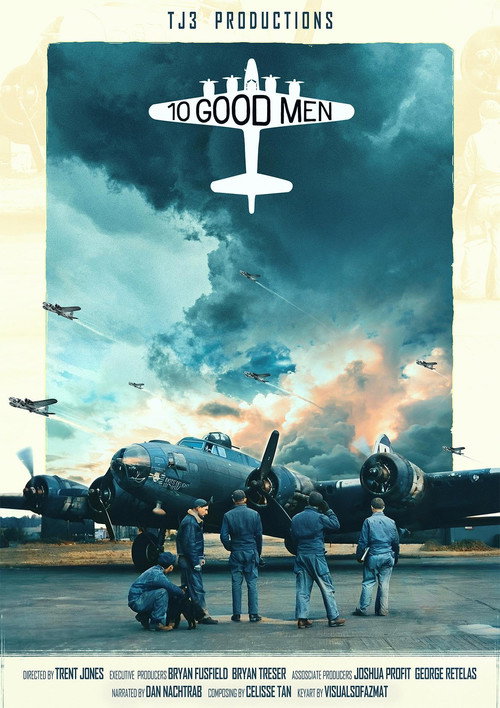
10 Good Men
Ten B-17 veterans are the central subjects, framed throughout as unambiguously heroic and worthy of preservation. Military equipment and missions are glamorized via newly restored/colorized archival footage and detailed technical accounts of B-17 operations. Sacrifice is explicitly honored — veterans describe watching crewmates die. The strategic air campaign is portrayed as effective and necessary (turning point with P-51 escorts, German defenses eventually collapsing). Nazi Germany functions as the clearly evil enemy justifying Allied bombing force.