Movie
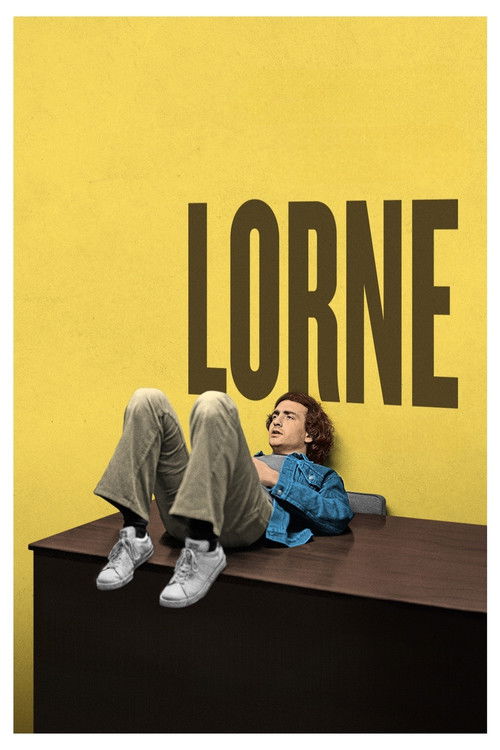
Lorne
Cultural messages
Power Means Duty
mediumMichaels holds extraordinary institutional status as SNL's sole architect across 50+ seasons. He explicitly frames continued involvement as moral obligation — telling Steve Martin he 'cannot leave because he must protect SNL.' The documentary's central tension is that his identity is inseparable from this duty: he refuses retirement not from ambition but from an expressed sense of custodial responsibility. Two signals fire clearly: his own words explicitly frame power as obligation (signal 3), and his identity is defined by duty to the institution rather than by power itself (signal 5).
About this message: Those gifted with extraordinary abilities, wealth, or status have a moral obligation to use them for others — and the weight of that duty can be crushing. Privilege creates obligation.
Movies that share these tropes



Full plot (spoilers)
Lorne (2026) is a biographical documentary directed by Morgan Neville that profiles Lorne Michaels, the Canadian-born creator and longtime executive producer of Saturday Night Live. The film traces Michaels' rise from a young Canadian comedy writer to the architect of the most enduring late-night sketch comedy franchise in American television history, now spanning more than 50 seasons. Through exclusive archival footage, behind-the-scenes access, and candid interviews with dozens of SNL alumni and collaborators, the documentary attempts to decode the enigmatic man at the center of an empire he built and has refused to relinquish. The film grants unusual access to the inner workings of SNL's weekly production cycle: Monday morning host meetings in Michaels' office where writers pitch ideas, Wednesday table reads where sketches are culled from dozens down to a handful, and Thursday and Friday rehearsals observed from beneath the audience bleachers. Viewers see Michaels in his element — sometimes composed, sometimes throwing ice cubes at walls in frustration — as the weekly pressure of live television bears down. Interviewees spanning multiple eras of the show, including Tina Fey, Chris Rock, Maya Rudolph, John Mulaney, Andy Samberg, Conan O'Brien, Jimmy Fallon, Seth Meyers, Kristen Wiig, Mike Myers, Chevy Chase, Steve Martin, and Paul Simon, reflect on Michaels' singular taste, his guardedness, his instincts for talent, and his central role in shaping American comedy for generations. Animated segments by Robert Smigel recreate moments from Michaels' life and career. On a personal level, the documentary offers only carefully controlled glimpses: photos of Michaels' current wife and children with obscured faces, footage at his Maine vacation home largely limited to exterior shots, and appearances by his first wife and early SNL writer Rosie Shuster. A recurring theme is Michaels' resistance to retirement — in one notable scene he tells Steve Martin he cannot leave because he must 'protect' SNL. Michaels himself acknowledges the limits of self-knowledge, saying 'People have this idea that they know me… But I don't know myself.' Reviewers note significant omissions: Eddie Murphy, widely considered SNL's biggest star, receives only a passing mention; Michaels' conspicuous five-year absence from the show between 1980 and 1985 is barely addressed; and criticisms around workplace culture and hiring diversity go largely unexplored. The result is a portrait that reveals the machinery of the institution more fully than the man who runs it.
Sources: Wikipedia, KPBS/NPR review, Web search aggregated results (NBCNews, Variety, GoldDerby)